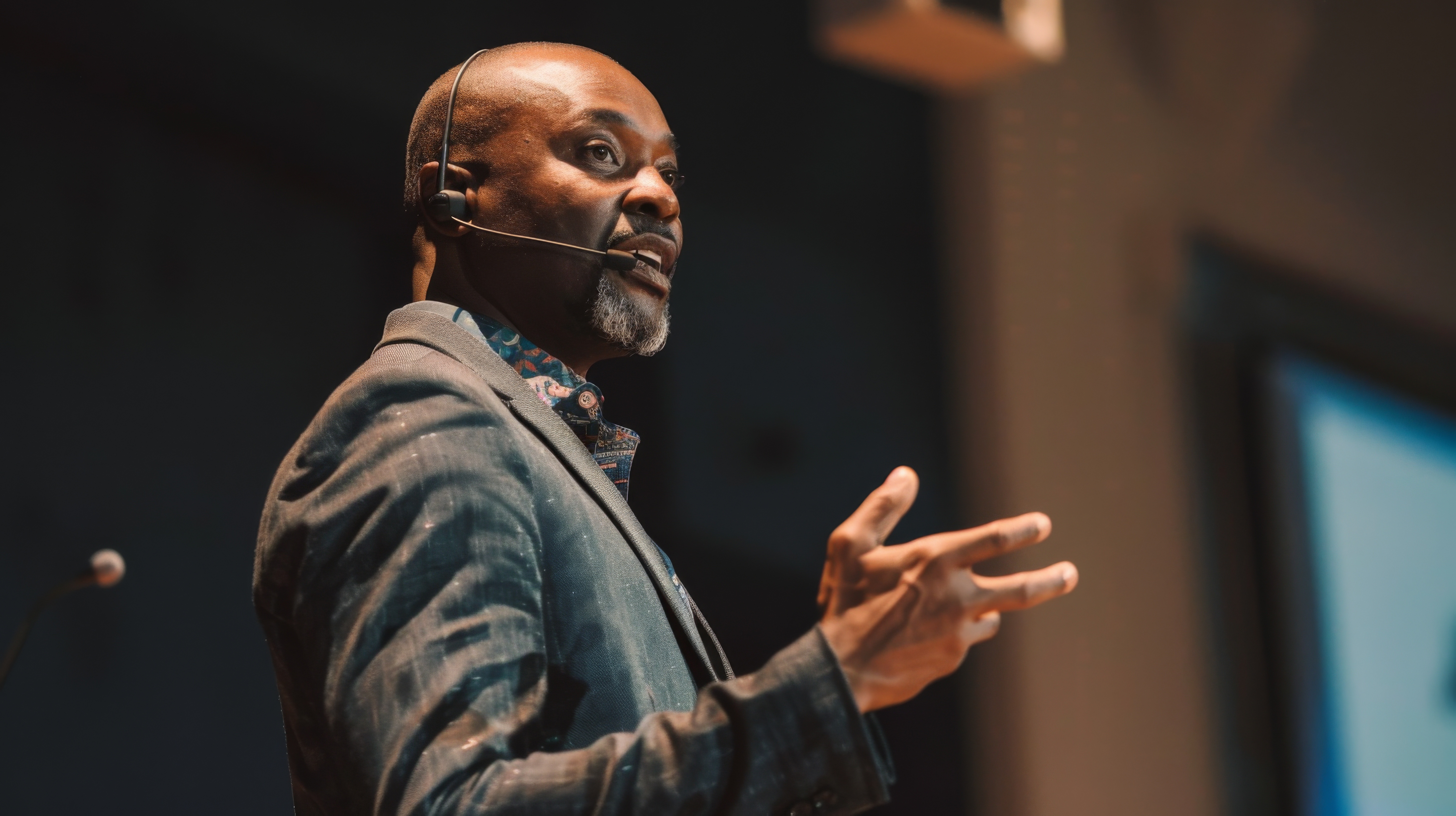
It’s a job that comes around too soon in an event manager’s pre-event calendar. Next year’s call for speakers needs to open… soon.
It’s tempting to dust off last year’s form, change the dates and hit send just to get it live. But a rushed call for speakers is how you end up with a programme full of thinly-veiled sales pitches, five white guys in suits on every panel and a weak pool of content to select genuinely quality sessions from.
A great call for speakers isn’t just a form . It’s the foundation of building a brilliant event programme, and it’s where you shift from being a collator of submissions to a curator of genuinely great content.
Here’s how to get it right.
1. Get your strategy straight before you open the form
Before you write a single field, get clear on what you’re actually trying to achieve. Who is this event for? What themes matter to your industry this year? Are there sponsors or partners you need to give a platform to? Is there a topic gap identified on your post event feedback you’re determined to fill?
None of this needs to take long, but skipping it is how you end up with a lopsided programme, three competing sessions on the same subject and no coherent story to tell attendees about what your event is really about.
2. Decide: open call, editorial planning or both
There’s more than one way to build a programme and it’s worth choosing deliberately rather than by default.
An open call for speakers crowd-sources ideas from your industry and its community. It might feel like it saves you hours of guessing what people want to hear, and it doubles as a marketing tool in its own right (more on that below). The trade-off is less editorial control: you’re at the mercy of whoever happens to submit (and what they’ve got to say).
Editorially generated topics, where your team or an expert panel decides the sessions first and then recruits speakers to deliver them, gives you tighter control over balance and quality and makes it much harder for anyone to sneak a product pitch onto the agenda disguised as a talk.
Many of the best programmes use a combination of both: an open call to surface fresh ideas and new voices, topped up with editorially commissioned sessions to plug any gaps.
3. Pull together a content team you trust
Don’t build the programme alone. Assemble a small group who represent your key stakeholders, sponsors and subject areas and use them to shape your tracks, themes and the call for speakers form itself.
If you’re running a review panel to assess submissions, recruit it independently of your commercial team. It’s the easiest way to avoid the awkward situation where a big exhibitor or sponsor submits a weak session and everyone feels pressure to accept it anyway.
4. Design a form that works hard for you
Every field you add to your call for speakers form should earn its place. At minimum, you’ll want the submitter’s contact details, the speaker’s bio and photo and a title and description for the talk. Beyond that, resist the urge to ask for everything under the sun: a long, effortful form is how genuinely great speakers with limited time quietly give up halfway through.
A handful of well-chosen categorisation fields will do far more work than a dozen open text boxes. Our suggestions include:
- Which track or stage does this belong to?
- Which level? Introductory, intermediate, advanced?
- What format? Keynote, panel, workshop, fireside chat, roundtable?
- Who is this session really for?
These fields aren’t just for your own shortlisting. Structured data is what lets your attendees actually plan their day, lets speakers and track owners find and manage their own sessions and, if you’re using a platform built for this, lets you go from “pile of submissions” to “published, searchable agenda” without weeks of manual sorting.
Explain every field. Speakers can’t read your mind about what “Track” means for your event and a confused submitter is a submitter who picks the wrong option or abandons the form entirely.
5. Tell speakers what to expect, not just what to submit
It sounds obvious, but while you’re building the form, give speakers the context they need to submit something you’ll actually want: what the event is about, who’s likely to be in the room, how submissions will be judged, when they’ll hear back and who to contact if they have questions. It costs you nothing and it noticeably improves the quality of what comes in.
6. Start early and build in time for a second wave
Six to nine months out is a comfortable lead time for most events. It gives speakers time to commit, gives you time to review properly and gives your marketing team a real story to promote well ahead of the show. Aim to have most of your programme confirmed a few months before the event, deliberately leaving some time open.
That spare time matters, because your first wave of acceptances will almost never fill every gap perfectly. Once you’ve seen who said yes, look honestly at what’s missing: a thin track, an under-represented topic, a panel that’s shaping up a little too homogenous, and run a short, tightly focused second call aimed squarely at that gap. The narrower the ask, the better the response. Or, if you’re combining a call for speakers with an editorial approach, let your conference producers loose on the gaps.
7. Make your call for speakers work harder for your event PR and marketing
A call for speakers isn’t just an intake form, it’s a genuine news story for your event at a time when you might not have much else to say. “Our call for speakers is open”, “two weeks left to submit”, “meet three speakers confirmed for this year”: each of these is a legitimate reason to post, email and remind your community that your event is happening. Promote it everywhere your speakers and attendees actually spend time such as your website, email list, social channels, partner and association newsletters and your own event blog.
8. Let the data keep working after the form closes
The real payoff of a well-built call for speakers doesn’t stop when submissions close. Every field you capture becomes the raw material for scheduling, for the attendee-facing agenda, for speaker communications, and for next year’s planning. If you’re still managing that journey across spreadsheets and email threads, this is usually the point where the cracks start to show. We hear stories of lost submissions, inconsistent agendas across spreadsheets, conference producers chasing the same speaker three times for information someone else already has.
This is exactly why Lineup Ninja was built. Instead of a form that becomes a dead-end in a spreadsheet, your call for speakers becomes the starting point of one connected process. Submissions flow straight into speaker management, agenda planning and automated, speaker communications, so nothing gets lost in translation between “call for speakers” and “programme published.”
Get your strategy “call for speakers’ right by building a form that respects your speakers’ time as much as it serves your own. Don’t forget to start early and promote it like the news story it is. Sometimes the simplest tweaks to the process will see you spending a lot less time collating submissions and a lot more time curating a programme you’re attendees will love.
Book a Lineup Ninja demo and see how the whole speaker journey, from first submission to published agenda, can run in one place.